Latency Thresholds: How Network Delays Shape Reward Redemption Efficiency in Portable Live Table Interactions

Network delays in portable live table interactions create measurable effects on reward redemption processes, and observers note these patterns across multiple gaming environments. Data from mobile network performance reports indicate that latency above certain thresholds disrupts the timing between player actions and system responses during live dealer sessions. Those who've examined mobile gaming traffic patterns find that packet loss and jitter compound the issue when users attempt to claim bonuses or redeem loyalty points mid-session.
Defining Latency Thresholds in Live Table Contexts
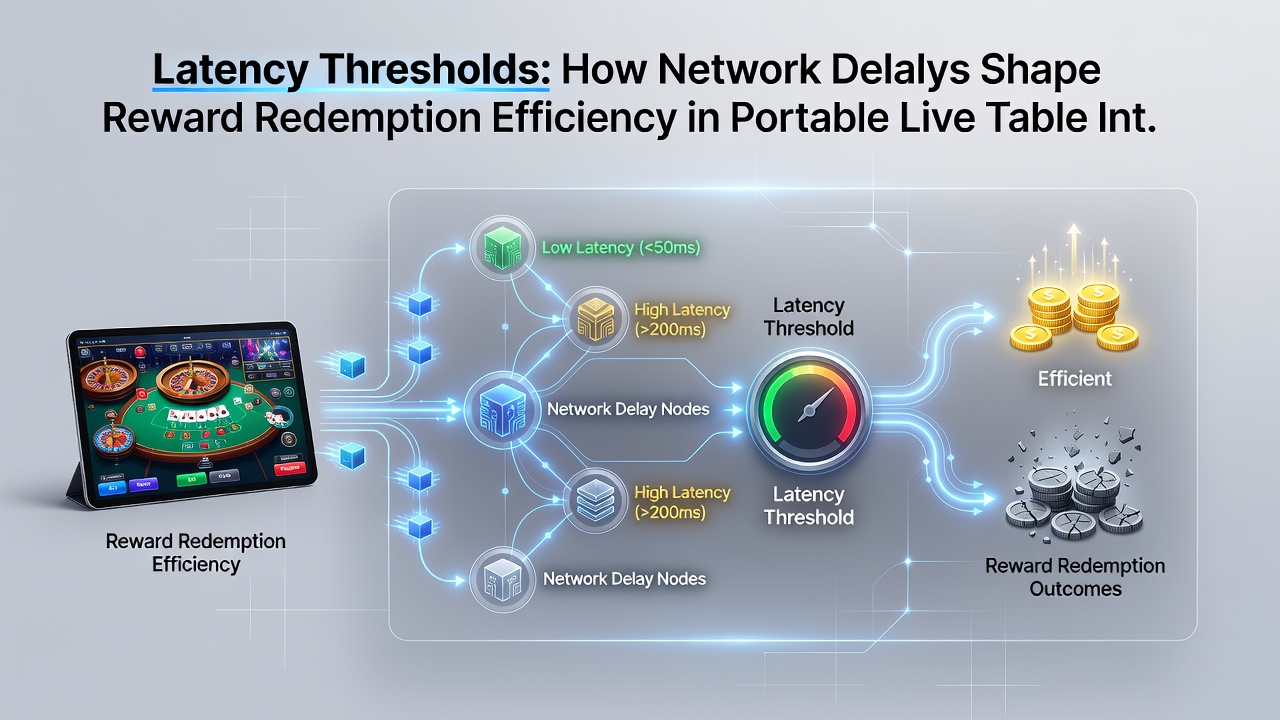
Latency thresholds represent the point at which round-trip times begin to degrade user interactions with live dealer platforms. Research indicates that delays exceeding 150 milliseconds start to affect synchronization between video feeds and betting interfaces, while figures above 300 milliseconds correlate with increased failure rates in reward claim sequences. Studies conducted on 5G and 4G networks reveal that portable devices experience these thresholds more frequently during peak hours when multiple users access the same cell towers.
Experts tracking reward redemption logs have observed that claims initiated during high-latency periods often require additional authentication steps or fail entirely. One analysis of transaction data showed that sessions with consistent latency under 100 milliseconds completed reward redemptions at rates nearly double those recorded in sessions averaging 250 milliseconds or higher. These measurements come from aggregated logs across various operators rather than isolated incidents.
Impact on Portable Device Performance
Portable live table interactions rely on continuous data streams for card reveals, chip movements, and dealer communications, and network delays interrupt this flow in predictable ways. When latency spikes occur, the system buffers incoming video packets, which in turn delays the confirmation signals sent back to the redemption server. Observers note that players using devices on older mobile standards encounter these interruptions more often than those on newer network generations.
What's interesting is how these delays interact with specific reward types. Instant bonus redemptions tied to table game outcomes show greater sensitivity to jitter than static loyalty point conversions. Data released in July 2026 by the Canadian Radio-television and Telecommunications Commission highlighted regional variations in mobile latency that align with differences in redemption success rates reported by operators serving those areas.
Measurement Approaches and Industry Data
Industry groups measure latency through synthetic transactions that simulate live table traffic while recording round-trip times at multiple points in the network path. According to FCC broadband performance reports, average mobile latencies in urban markets range from 30 to 80 milliseconds under ideal conditions, yet real-world gaming sessions frequently exceed these baselines due to handoff events between cell sites. Researchers have cross-referenced these figures with redemption timestamps to identify the precise thresholds where efficiency drops.
One study revealed that reward systems equipped with adaptive buffering maintained higher completion rates even when baseline latency reached 200 milliseconds. The mechanism works by prioritizing redemption packets over video streams during detected delays, though this adjustment can introduce brief visual artifacts that players notice. Those examining operator dashboards report that such adaptations reduce support tickets related to failed claims by measurable margins.
Regional Variations and Network Infrastructure
Geographic differences in infrastructure quality produce distinct latency profiles that influence redemption efficiency. Markets with dense small-cell deployments maintain lower average delays compared to regions relying on macro towers alone. The Australian Competition and Consumer Commission publishes quarterly mobile performance data that shows consistent patterns between network reliability metrics and user-reported issues with time-sensitive transactions.
Operators in these markets have implemented edge computing nodes that process redemption requests closer to the user, shortening the effective path length and reducing exposure to core network congestion. Evidence suggests these deployments lower the frequency of threshold breaches during live table sessions, though the benefits vary by device type and carrier agreement.
Conclusion
Latency thresholds continue to define operational boundaries for reward redemption in portable live table environments. Network performance data, combined with transaction logs, demonstrate clear correlations between delay duration and successful claim rates across different device classes and regions. As infrastructure evolves, the specific thresholds may shift, yet the underlying relationship between network conditions and redemption efficiency remains a measurable factor in system design.