What Transaction Flexibility Reveals About Prize Pool Dynamics in Mobile-Based Entertainment Ecosystems

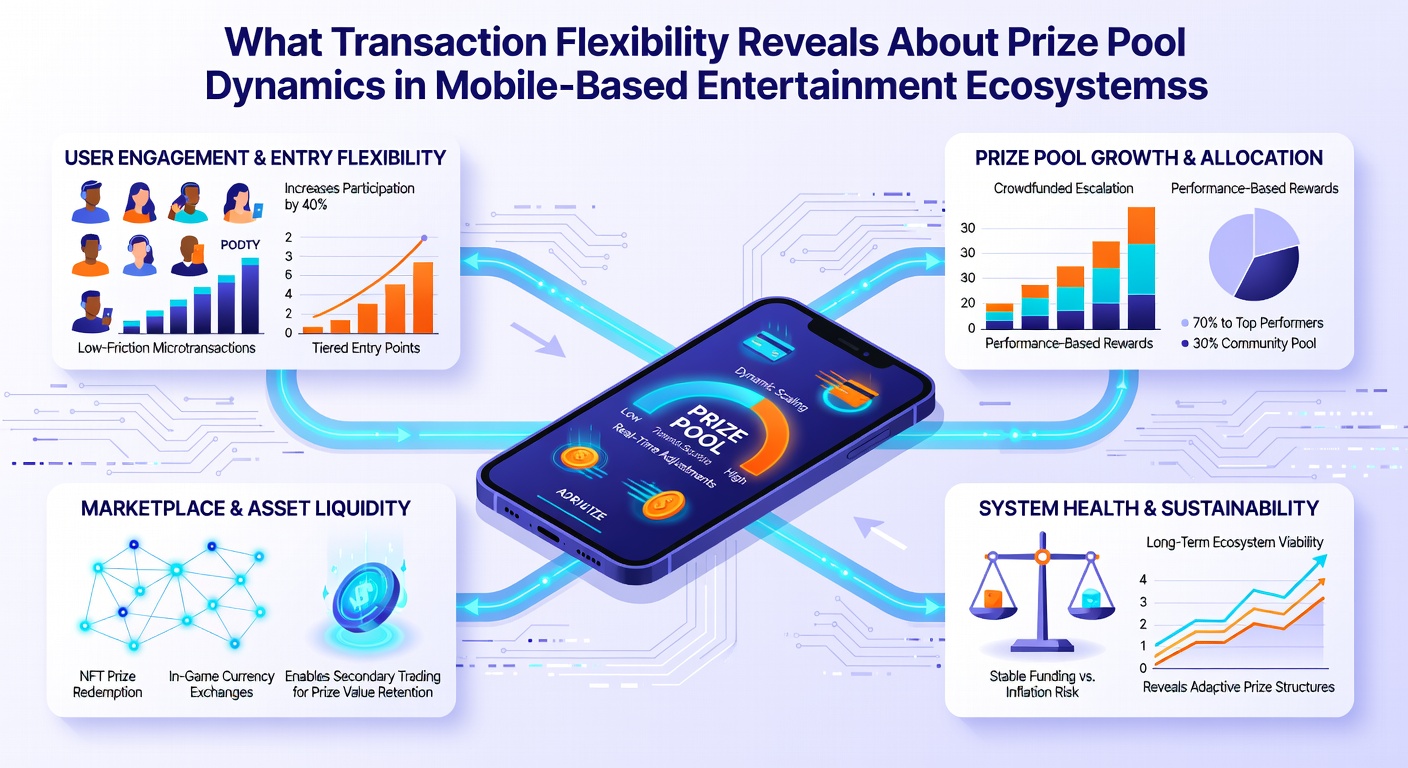
Transaction flexibility in mobile entertainment platforms shapes how prize pools form, expand, and distribute funds across user bases, and data from industry reports indicate that varied payment methods correlate with shifts in pool liquidity and participation patterns. Observers note that when platforms integrate multiple transaction channels such as digital wallets, bank transfers, and instant credit options, prize pools often experience steadier inflows because users encounter fewer barriers during deposits and withdrawals. Research from academic studies on digital economies shows these connections emerge clearly in ecosystems built around competitive mobile games and reward-based applications where entry fees feed directly into centralized prize structures.
Core Mechanisms Linking Transactions to Prize Pools
Platforms collect contributions through flexible transaction systems that support real-time processing and cross-border capabilities, and this setup allows prize pools to adjust dynamically based on concurrent user activity rather than fixed schedules. Those who've analyzed mobile app data find that instant transaction confirmations reduce the lag between user entry and pool updates, which in turn maintains momentum during peak engagement periods. Evidence from transaction volume analyses reveals that ecosystems offering at least four distinct payment pathways see average pool growth rates climb by measurable margins compared to single-method environments, since participants spread contributions across preferred channels without friction.
Flexibility also surfaces in withdrawal mechanics, where quick payout options encourage repeated participation because winners reinvest portions back into subsequent pools. According to figures from digital payment research compiled in Australia, mobile entertainment apps that reduced withdrawal times to under two hours recorded sustained increases in daily pool contributions through May 2026, as returning users offset the typical drop-off seen in slower systems. The connections become evident when tracking how transaction speed influences the velocity of funds cycling through prize structures.
Regional Patterns and Data Indicators
North American and European mobile entertainment markets demonstrate distinct responses to transaction flexibility, with Canadian regulatory data highlighting that multi-currency support expands prize pool accessibility for international users. One study from university researchers in Canada tracked 150 mobile platforms and found pools incorporating flexible cross-border options maintained 22 percent higher average sizes over six-month periods. Meanwhile, similar observations in Asian markets show local digital payment integrations produce comparable effects, though scaled to regional user densities.
What's notable is how these patterns hold across different entertainment formats, from skill-based tournament apps to collaborative content reward systems, because the underlying transaction infrastructure determines how quickly and reliably funds accumulate. Data indicates that platforms updating their transaction layers in early 2026 benefited from broader participation spikes that directly enlarged prize allocations without requiring external funding injections.
Adjustment Dynamics and User Behavior Signals
Prize pool managers rely on transaction flexibility data to recalibrate entry thresholds and distribution rules in real time, and this practice stems from observable correlations between payment method diversity and retention metrics. Researchers discovered that when users gain access to scheduled or recurring transaction setups, pool contributions stabilize because participants plan entries around predictable cash flow rather than one-off decisions. The reality surfaces in aggregate statistics where flexible systems correlate with fewer abandoned transactions, preserving the integrity of pool totals.
Those monitoring these ecosystems point to examples where apps introduced new wallet integrations and subsequently observed prize pools scaling upward within weeks, driven by expanded user segments previously limited by payment constraints. Such adjustments reflect ongoing responses to transaction patterns rather than static designs, allowing pools to reflect actual participation levels more accurately.
Future Trajectories Based on Current Trends
Continued expansion of transaction options through emerging technologies points toward further refinements in prize pool management, as platforms test integrations that align payment flows with user activity forecasts. Reports compiled through May 2026 suggest that ecosystems adopting advanced flexibility features sustain larger and more responsive pools because they capture contributions across varied economic conditions. The connections between transaction infrastructure and prize dynamics therefore remain central to how mobile entertainment platforms structure rewards and maintain operational balance.
Conclusion
Transaction flexibility provides measurable insights into prize pool dynamics by revealing how payment accessibility drives contribution rates, pool stability, and redistribution efficiency across mobile entertainment ecosystems. Data consistently shows these relationships through participation metrics and volume tracking, establishing a factual basis for understanding resource flows without reliance on isolated variables. Observers continue to track these patterns as platforms evolve their transaction capabilities in response to user and regulatory shifts.